| Detail | Information |
|---|---|
| Official name | Te Wiki o te Vagahau Niue |
| Dates in 2026 | 19–25 October |
| Coordinating body | Ministry for Pacific Peoples (Manatū Moana) |
| Part of | Nine Pacific Language Weeks (NZ annual calendar) |
| Language | Vagahau Niue (ISO 639-3: niu) |
| UNESCO status | Vulnerable |
| NZ Niuean population | approx. 25,000 (2018 Census) |
| Niue island population | approx. 1,500 |
| Resource release | First week of October, before the week begins |
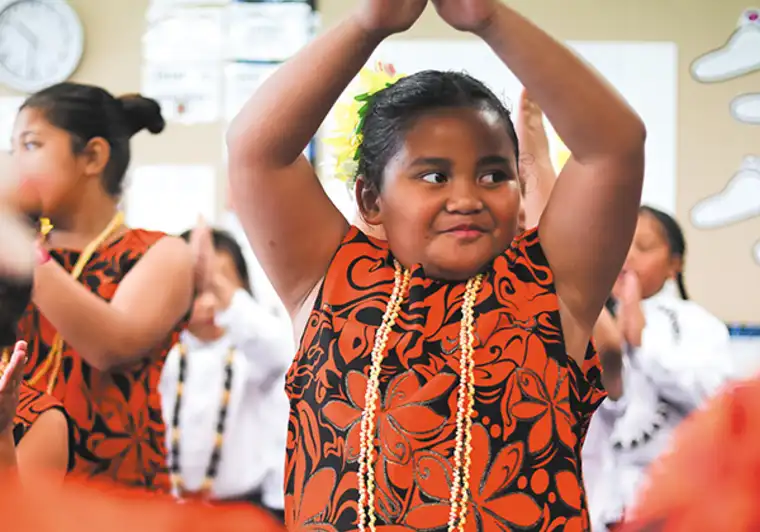
Niue Language Week (Te Wiki o te Vagahau Niue) runs 19–25 October 2026. It is the only week in the New Zealand calendar dedicated specifically to Vagahau Niue — a language spoken by more people in Auckland than on Niue island itself. The week is coordinated by the Ministry for Pacific Peoples and is explicitly open to all New Zealanders, not only those with Niuean heritage.
Why the Week Exists: A Language Under Pressure
UNESCO classifies Vagahau Niue as "vulnerable." The practical meaning of that classification is specific: younger generations in New Zealand typically grow up speaking English at home, with Vagahau Niue appearing mainly at church services, family occasions, and during this week in October.
The 2018 New Zealand Census recorded approximately 25,000 people identifying as Niuean. Niue island's resident population sits around 1,500 — a ratio of roughly 16:1 in favour of New Zealand. Every Niuean citizen holds New Zealand citizenship by right under the Niue Constitution Act 1974, which has driven sustained outmigration since the 1970s. First-generation migrants born on Niue are generally fluent. Second and third generations in New Zealand often have passive competence — they understand spoken Vagahau Niue but do not speak it confidently. Niue Language Week is one of the few structured mechanisms designed to interrupt that pattern.
What Happens During Niue Language Week
The week is not a single event. It is a coordinated series of activities across schools, community organisations, government agencies, and media — running simultaneously in Auckland, Wellington, and Christchurch.
Schools and early childhood centres:
- Vagahau Niue greetings, songs, and counting activities incorporated into daily routines
- Early childhood centres in Māngere and Ōtara are the most likely to run full-day Vagahau Niue programmes
- Primary schools with significant Niuean student populations use Ministry resources in class
- New Zealand's early childhood framework (Te Whāriki) explicitly supports Pacific languages and cultures, providing a curriculum basis for participation
Community events:
- Church services conducted partly or fully in Vagahau Niue — Niue Ekalesia congregations (affiliated with the Congregational Christian Church) hold services in multiple Auckland locations
- Cultural performances including hiapo demonstrations and traditional song
- Language workshops in Auckland, Wellington, and Christchurch
- Hiapo-making groups in Auckland and Wellington often conduct sessions in Vagahau Niue during the week — one of the few non-church contexts where the language is used in sustained conversation
Media:
- RNZ Pacific broadcasts Niuean language content throughout the week
- Niu FM runs Vagahau Niue segments and features
- Social media campaigns using the official hashtag announced by the Ministry for Pacific Peoples each year
Government and workplaces:
- Government agencies publish materials in Vagahau Niue
- The Ministry for Pacific Peoples releases employer resources encouraging workplace participation
- Some government departments use Vagahau Niue greetings in official communications during the week
Free Resources Released Each Year
The Ministry for Pacific Peoples produces a new set of resources for each Niue Language Week. These are free, produced by fluent speakers, and phonetically accurate. They are released in the first week of October — before the week begins — so schools, workplaces, and community groups have time to prepare.
| Resource Type | Format | Primary Audience |
|---|---|---|
| Phrase cards | PDF, printable | Schools, workplaces, individuals |
| Audio recordings | Digital download | Pronunciation practice |
| Activity sheets | Early childhood, primary school | |
| Employer guide | Workplaces, HR teams | |
| Social media assets | Image files | Community organisations |
These resources remain available after the week ends — they are not removed. For non-speakers, the audio recordings are the most important resource: written Vagahau Niue is phonetically consistent (each letter represents one sound), but hearing a fluent speaker is the fastest way to calibrate pronunciation before using phrases in public.
Vagahau Niue Phrases to Use During the Week
These phrases appear in Ministry resources each year and are the ones Niuean community members — particularly elders — are most likely to recognise and respond to.
| Vagahau Niue | English | Context |
|---|---|---|
| Fakaalofa lahi atu | Hello (formal, great love extended to you) | Meetings, addressing elders, formal events |
| Fakaalofa atu | Hello (informal) | Everyday use with peers |
| Fakaaue lahi | Thank you very much | Any context |
| Fakaaue | Thank you | Any context |
| Io | Yes | Any context |
| Nakai | No | Any context |
| Fiafia | Happy / glad | Expressing positive feeling |
| E lelei koe? | Are you well? | Greeting follow-up |
| Io, e lelei au | Yes, I am well | Response to above |
| Ko au ko [name] | My name is [name] | Introduction |
| Tofa soifua | Farewell (formal) | End of formal event |
| Tofa | Goodbye | Everyday farewell |
| Fakaalofa lahi atu ki a mutolu | Hello to a group (formal) | Addressing multiple people |
On "Fakaalofa": The word is not a casual hello. It derives from alofa — love, compassion — with the causative prefix faka-. "Fakaalofa lahi atu" translates roughly as "great love extended to you." It is used at the start of formal speeches, church services, and community events. Using it correctly signals that you understand what you are saying, not just how to say it. The informal version, "Fakaalofa atu," is appropriate for everyday use with peers.
How to Participate — For All New Zealanders
Niue Language Week is explicitly designed for all New Zealanders, and the Ministry for Pacific Peoples actively encourages non-Niuean participation. Learning basic phrases and using them respectfully is welcomed by the Niuean community — the week is not a closed cultural event.
Practical entry points:
- Learn "Fakaalofa lahi atu" and use it during the week — in meetings, at the start of emails, in classrooms
- Download the Ministry's free phrase cards and audio recordings before the week begins
- Attend a community event in Auckland — Māngere and Ōtara have the highest concentration of Niuean community organisations
- Listen to RNZ Pacific or Niu FM during the week for spoken language exposure
- Use the week's resources in a classroom or workplace setting
- Contact the Niue Island Council of New Zealand for information on hiapo groups and community events in your area
Common mistakes to avoid:
- Do not treat Vagahau Niue as a dialect of Samoan or Tongan — they are related but distinct languages, not mutually intelligible. Vocabulary overlap with Samoan and Tongan exists but is limited to shared Proto-Polynesian roots.
- Do not skip macrons in written Vagahau Niue — "mama" and "māmā" are different words. Macrons mark phonemic length, not decoration.
- Do not assume that knowing te reo Māori gives you a shortcut — the grammar logic is similar (VSO word order, particle-based tense marking, no verb conjugation), but the vocabulary is largely different.
Community Events by Location
| City / Area | Key Locations | Typical Events |
|---|---|---|
| Auckland — Māngere | Niue Ekalesia congregations, community halls | Church services, language workshops, hiapo sessions |
| Auckland — Ōtara | Community centres, schools | Cultural performances, school activities |
| Auckland — Papatoetoe | Community organisations | Family events, language activities |
| Wellington — Porirua | Community halls, churches | Church services, cultural events |
| Wellington — Hutt Valley | Community organisations | Family gatherings, language activities |
| Christchurch | Pacific community centres | Cultural events, language workshops |
The Niue Island Council of New Zealand is the primary contact for current event listings. Events are typically announced in the first two weeks of October. Church services — particularly Niue Ekalesia services in Māngere — are the single most effective exposure method for hearing Vagahau Niue spoken fluently and at length.
Schools and NCEA: Formal Recognition of Vagahau Niue
The New Zealand Qualifications Authority (NZQA) offers Vagahau Niue at NCEA Levels 1, 2, and 3. Students can gain formal qualifications in the language — a significant policy commitment for a language with approximately 2,000–4,000 active speakers globally.
| NCEA Level | Standards Available |
|---|---|
| Level 1 | Listening, reading, speaking, writing (basic) |
| Level 2 | Extended listening, reading, writing; cultural context |
| Level 3 | Advanced language use; cultural analysis |
In practice, very few schools offer NCEA Vagahau Niue. The constraint is teacher supply, not curriculum policy. Schools in Māngere and Ōtara with significant Niuean student populations are the most likely to have access to qualified teachers. For students with Niuean heritage, NCEA Vagahau Niue offers formal recognition of a language they may already speak at home. Niue Language Week is often the one week per year when Vagahau Niue appears in classrooms that do not otherwise teach it.
No New Zealand university currently offers Vagahau Niue as a credit-bearing course. No major language app — including Duolingo — offers Vagahau Niue as of 2026. The Ministry for Pacific Peoples' annual resources and direct community contact remain the primary learning pathways.
The Language: Key Features Worth Knowing
Understanding a few structural features of Vagahau Niue makes participation in Language Week more meaningful than surface-level phrase repetition.
VSO word order: Vagahau Niue places the verb first. "I eat fish" becomes Kai au he ika (Eat I [the] fish). This is the opposite of English and the most consistent source of errors for new learners.
No verb conjugation: Tense is marked by particles placed before the verb. The verb itself does not change.
| Particle | Function | Example |
|---|---|---|
| ne | Past tense | Ne kai au he ika. (I ate fish.) |
| ke | Future / subjunctive | Ke kai au he ika. (I will eat fish.) |
| e | Present / habitual | E kai au he ika. (I eat fish.) |
| kua | Completed action | Kua kai au. (I have eaten.) |
| ko | Equative / present state | Ko au ko Sione. (I am Sione.) |
Inclusive and exclusive "we": Vagahau Niue distinguishes between taua (we, including the person you are speaking to) and maua (we, not including the person you are speaking to). This distinction — absent in English and te reo Māori — reflects a cultural emphasis on inclusion and belonging. Using maua when you mean taua excludes the person you are speaking to from the group you are describing. In a culture where inclusion is a central value, this is a meaningful error.
Reduplication in colour terms: Colour adjectives are formed by doubling a root — hina (pale) becomes hinehina (white); uli (dark) becomes uliuli (black); kulo (red) becomes kulokulo. Once you recognise the pattern, you can decode colour terms you have not seen before.
Hiapo and Uga: Cultural Context Beyond the Phrases
Two cultural reference points that appear regularly during Niue Language Week:
Hiapo is the traditional Niuean art of decorative cloth-making — originally tapa cloth, now more commonly expressed as quilting. Hiapo patterns are geometric and carry cultural meaning specific to family and region. In New Zealand, hiapo-making groups in Auckland and Wellington often conduct their sessions in Vagahau Niue, making them one of the few non-church contexts where the language is used in sustained conversation. Attending a hiapo session during Niue Language Week provides language exposure that phrase cards cannot replicate.
Uga (the coconut crab, Birgus latro) is a significant cultural symbol in Niue — the island is one of the few places in the Pacific where the species remains abundant. Uga appears in Niuean food culture, storytelling, and as an informal symbol of Niuean identity. Knowing the word and its cultural weight is a small but genuine signal of engagement with Niuean culture beyond the language classroom.
FAQ
When exactly is Niue Language Week in 2026, and when are resources released?
Niue Language Week runs from Sunday 19 October to Saturday 25 October 2026. It is held annually in October and is one of nine Pacific Language Weeks coordinated by the Ministry for Pacific Peoples (Manatū Moana). Resources — phrase cards, audio recordings, activity sheets, and employer guides — are typically released in the first week of October, before the week begins, so schools, workplaces, and community groups have time to prepare. These resources remain available after the week ends.
What free resources does the Ministry for Pacific Peoples release for Niue Language Week?
Each year the Ministry releases: printable phrase cards, audio recordings by fluent speakers, activity sheets for early childhood and primary school, employer participation guides, and social media assets. All are free and remain available after the week ends. The audio recordings are the most important resource for non-speakers — written Vagahau Niue is phonetically consistent (each letter represents one sound), but hearing a fluent speaker is the fastest way to calibrate pronunciation before using phrases in public.
Can I participate in Niue Language Week without a Niuean background?
Yes. Niue Language Week is explicitly designed for all New Zealanders, and the Ministry for Pacific Peoples actively encourages non-Niuean participation. Learning basic phrases and using them respectfully is welcomed by the Niuean community. Practical starting points: download the Ministry's free resources, attend a community event in Māngere or Ōtara, listen to RNZ Pacific or Niu FM during the week, and use "Fakaalofa lahi atu" in meetings or classrooms. The practical constraint is resource availability — there are no apps, no university courses, and few textbooks for Vagahau Niue — but the Ministry's annual materials are a reliable starting point.
Why does Niue Language Week focus on New Zealand rather than Niue island?
Because that is where most Niuean speakers live. The 2018 New Zealand Census recorded approximately 25,000 people identifying as Niuean. Niue island's resident population is around 1,500 — a ratio of roughly 16:1. Every Niuean citizen holds New Zealand citizenship by right under the Niue Constitution Act 1974, which has driven sustained outmigration since the 1970s. The language's survival depends on transmission in New Zealand communities, particularly in South Auckland — Māngere, Ōtara, Papatoetoe, and Manurewa — where the largest Niuean populations are concentrated. Research on Pacific language transmission consistently shows the highest risk of loss in the second and third generations born in New Zealand.