| Fact | Detail |
|---|---|
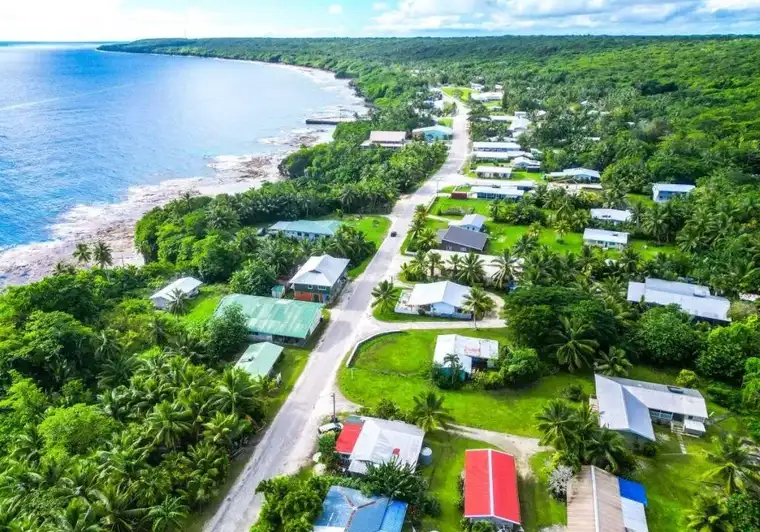
| Niuean population on Niue island | approx. 1,500 (2024 estimate) |
| Niuean community in New Zealand | approx. 25,000+ (2018 Census) |
| Diaspora-to-island ratio | approx. 16:1 — the highest among Pacific nations with NZ ties |
| Largest NZ communities | Māngere, Ōtara, Papatoetoe, Manurewa (Auckland); Porirua (Wellington) |
| Language status | UNESCO: Vulnerable |
| Political status | Free association with New Zealand since 1974 |
| Active speakers globally | estimated 2,000–4,000 |
| Niue Language Week 2026 | 19–25 October |
More Niueans live in South Auckland than on Niue island. The ratio — roughly 16 New Zealand residents for every one island resident — is the most extreme demographic inversion among Pacific communities with New Zealand ties. The Cook Islands diaspora in New Zealand outnumbers the island population by about 3:1. Niue's inversion is five times more pronounced.
That demographic fact shapes everything about Niuean identity in New Zealand. The language, the cultural practices, the community institutions — all of them are doing work that would normally happen on the island itself. Niuean identity in New Zealand is not a copy of island life. It is the primary site where that identity is being negotiated, maintained, and passed on.
"Pacific" Is Not One Thing: Where Niuean Identity Sits
New Zealand policy and media frequently use "Pacific" as a single category. For Niueans, this flattening is a persistent source of friction.
Niuean identity is distinct from Samoan, Tongan, Cook Islands Māori, Fijian, and other Pacific identities in specific, documented ways:
| Dimension | Niuean specifics |
|---|---|
| Language | Vagahau Niue — not mutually intelligible with Samoan, Tongan, or te reo Māori |
| Land tenure | Communal family ownership through magafaoa lines — not individual title |
| Political status | Free association with New Zealand since 1974 — Niueans hold NZ citizenship by right |
| Population scale | One of the smallest Pacific nations by resident population |
| Cultural symbols | Hiapo (geometric cloth art), uga (coconut crab), fakaalofa (love as greeting) |
| Historical narrative | Captain Cook named the island "Savage Island" in 1774 after being refused landing — Niueans have consistently rejected this name |
The "Savage Island" episode is not a minor historical footnote. It encodes a pattern: Niuean self-determination against external categorisation. The island's own name, Niue, is used by Niueans; the colonial name was never accepted. That same insistence on distinctiveness runs through how Niueans in New Zealand navigate the "Pacific" label.
Language as Identity Marker: Vagahau Niue in the Diaspora
For many New Zealand-born Niueans, Vagahau Niue is not primarily a communication tool. It is an identity signal.
Speaking even a few words — "Fakaalofa lahi atu," "Fakaaue," "Magafaoa" — signals belonging, respect for elders, and connection to a specific heritage. The greeting "Fakaalofa lahi atu" derives from alofa (love, compassion) with the causative prefix faka-. When you say it, you are extending great love toward the other person. The word encodes a value system, not just a social convention.
Vagahau Niue has UNESCO "vulnerable" status. The practical meaning in New Zealand:
- First-generation migrants (born on Niue or raised in Niuean-speaking households): typically fluent
- Second generation (New Zealand-born children of migrants): often passive competence — understand spoken Vagahau Niue but do not speak it confidently
- Third generation: frequently English-dominant, with limited passive knowledge
This generational pattern is not unique to Niueans — it appears across Pacific communities in New Zealand. What makes the Niuean case acute is the scale: with only 2,000–4,000 active speakers globally, the language has no large population base to draw on. The survival of Vagahau Niue depends almost entirely on what happens in Māngere and Ōtara, not in Alofi.
Magafaoa: Family as the Foundation of Niuean Identity
The word magafaoa translates as "family" — but the English word undersells it. Magafaoa is the extended family network that defines social obligations, land rights, and community roles in Niuean life.
On Niue, land is held communally through family lines, not individual ownership. That system does not transfer to New Zealand in a legal sense — New Zealand property law applies here. But the cultural logic persists. Decisions about community events, resource sharing, and social obligations are still organised through family networks in South Auckland Niuean communities.
Key kinship terms that encode this logic:
| Vagahau Niue | English | Cultural note |
|---|---|---|
| Magafaoa | Extended family | Defines land rights and social obligations |
| Tupuna | Grandparent / ancestor | Same word for both — ancestors remain present in family decisions |
| Matua | Parent / elder | Authority figure in family and community |
| Taokete | Older sibling (same gender) | Carries specific obligations toward younger siblings |
| Tehina | Younger sibling (same gender) | Receives guidance from taokete |
| Tuagane | Brother (used by a sister) | Defined by speaker's gender, not sibling's |
| Tuafafine | Sister (used by a brother) | Relationship defined by your position, not the sibling's |
The sibling terms are particularly revealing. In English, "brother" and "sister" are defined by the sibling's gender. In Vagahau Niue, the terms are defined by the speaker's gender. This is not a vocabulary quirk — it reflects a kinship logic where your position in the family determines how you name relationships.
The word tupuna covering both "grandparent" and "ancestor" reflects a cultural reality where the distinction between living elders and deceased ancestors is less sharp than in English-speaking contexts. Ancestors are present in family decisions, land rights, and cultural practice. This is not metaphorical — it is how Niuean families in New Zealand actually discuss decisions about land, community roles, and cultural obligations.
Hiapo, Uga, and the Cultural Markers That Distinguish Niuean Heritage
Two cultural markers appear consistently in discussions of Niuean identity: hiapo and uga. Both are specific to Niue and do not appear in the same form in other Pacific cultures.
Hiapo is the traditional Niuean art of decorative cloth-making — originally tapa cloth, now more commonly expressed as quilting. Hiapo patterns are geometric and carry cultural meaning specific to family and region. In New Zealand, hiapo-making groups in Auckland and Wellington often conduct their sessions in Vagahau Niue, making them one of the few non-church contexts where the language is used in sustained adult conversation.
Hiapo groups serve a dual function: they maintain a craft tradition and they create a space for language use. For second and third-generation Niueans who may not attend church services regularly, hiapo groups are often the most accessible point of contact with both the language and the community.
Uga — the coconut crab (Birgus latro) — is a significant cultural symbol. Niue is one of the few places in the Pacific where the species remains abundant, partly because of traditional conservation practices. Uga appears in Niuean food culture, storytelling, and as an informal symbol of Niuean identity. Knowing the word and its cultural weight is a small but genuine signal of engagement with Niuean culture beyond the language classroom.
Other cultural concepts encoded in the language:
| Concept | Vagahau Niue | Significance |
|---|---|---|
| Sacred prohibition | Tapu | Source of English "taboo" — borrowed from Polynesian languages in the 18th century |
| Community assembly | Fono | Meeting, council — the mechanism of collective decision-making |
| Love as greeting | Fakaalofa | The same word covers love, compassion, and formal greeting |
| Communal family | Magafaoa | Family in the broad, obligatory sense — not just nuclear family |
The Generational Gap: How Identity Shifts Across Three Generations
The generational pattern in Niuean New Zealand communities follows a documented trajectory, and understanding it explains why certain cultural practices matter more than others for identity transmission.
First generation (born on Niue, migrated to New Zealand): Fluent in Vagahau Niue. Identity strongly anchored to island origin, village, and family line. Church attendance high. Language used at home.
Second generation (New Zealand-born, parents from Niue): Passive competence in Vagahau Niue. Identity negotiated between Niuean heritage and New Zealand upbringing. Church attendance variable. Language heard at home but English dominant.
Third generation (New Zealand-born, grandparents from Niue): Often English-dominant. Identity expressed through cultural markers — hiapo, food, community events — rather than language. Niue Language Week may be the primary annual contact point with Vagahau Niue.
This is a predictable outcome of migration and schooling in an English-dominant environment. The question for Niuean communities in New Zealand is which cultural practices can carry identity across generations when language transmission is incomplete.
In practice, three overlapping mechanisms do this work:
- Church services through Niue Ekalesia congregations in Māngere, Ōtara, and Porirua
- Hiapo groups in Auckland and Wellington
- Family gatherings where elders use Vagahau Niue and cultural obligations are maintained
NCEA Vagahau Niue at Levels 1, 2, and 3 provides formal recognition of the language in the education system — though in practice, very few schools offer it due to teacher supply constraints, not curriculum policy.
Niue Language Week as an Annual Identity Event
Niue Language Week (Te Wiki o te Vagahau Niue) runs 19–25 October 2026. It is one of nine Pacific Language Weeks coordinated by the Ministry for Pacific Peoples (Manatū Moana), and it functions as more than a language promotion exercise.
For many New Zealand Niueans, the week is the most visible annual assertion of Niuean distinctiveness within the broader Pacific community. Schools and early childhood centres incorporate Vagahau Niue greetings and activities. Community events run in Auckland, Wellington, and Christchurch. RNZ Pacific and Niu FM broadcast Niuean language content. The Ministry for Pacific Peoples releases free phrase cards, audio recordings, and activity sheets — produced by fluent speakers, phonetically accurate, and available after the week ends.
The week is explicitly open to all New Zealanders. Common entry points for non-Niueans:
- Learn and use "Fakaalofa lahi atu" during the week — in meetings, at the start of emails, in classrooms
- Attend a community event in Māngere or Ōtara, where the highest concentration of Niuean community organisations is located
- Download the Ministry for Pacific Peoples' free resources — the most reliable starting point for pronunciation
- Listen to RNZ Pacific or Niu FM during the week for spoken language exposure
Niuean Identity in New Zealand Institutions
Niue's political relationship with New Zealand is unusual among Pacific nations. Under the Niue Constitution Act 1974, Niue entered free association with New Zealand. Every Niuean citizen holds New Zealand citizenship by right — a status that has driven sustained outmigration since the 1970s and produced the 16:1 diaspora-to-island ratio.
This political arrangement has institutional consequences for how Niuean identity is recognised and supported:
| Institution | Niuean-specific provision |
|---|---|
| NZQA | Vagahau Niue available at NCEA Levels 1, 2, and 3 |
| Ministry for Pacific Peoples | Annual Niue Language Week resources; Niuean community funding |
| Te Whāriki (ECE framework) | Explicitly supports Pacific languages and cultures |
| New Zealand Curriculum | Pacific language learning supported in Languages learning area |
| RNZ Pacific / Niu FM | Niuean language content, particularly during Language Week |
| Niue Island Council of New Zealand | Primary community organisation connecting Niueans across NZ |
Niueans are New Zealand citizens, not immigrants in the conventional sense. There is no "return" in the same way as for communities from independent nations. The island's resident population of approximately 1,500 is too small to sustain the language and cultural institutions independently. The future of Niuean identity — including the survival of Vagahau Niue — is being determined in South Auckland, not in Alofi.